St. Cloud and the Greater Central Florida
Hablamos Español

Emergency AC Repair in St. Cloud FL: Fast 24/7 Response, Average 45-Minute Arrival
When your AC breaks down in St. Cloud during summer, waiting isn't an option. The intense heat and humidity can turn an uncomfortable home into a dangerous one in just a few hours. That's why we're ready to dispatch immediately. Baez & Son offers 24/7 emergency response. Call us at (407) 460-8406 for urgent assistance.
CAC#1823925 | CMC#1251747
5-Star Google Rated
45-Min Response
Home > Services > Air Conditioning Repair Service > Emergency AC Repair
It's the middle of the night, a weekend, or a holiday, and your air conditioning suddenly quits. The temperature inside your home is climbing fast, and you need someone who will actually answer the phone and show up. This isn't something that can wait until Monday. Baez & Son provides 24/7 emergency AC repair in St. Cloud, FL, with an average 45-minute response time. For less urgent AC issues, our AC repair team also handles same-day calls.
When Your Broken AC Becomes a Real Emergency
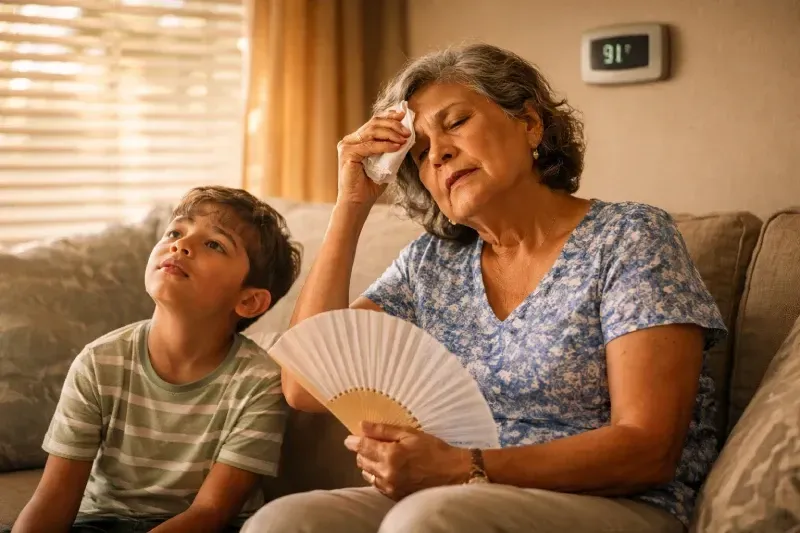
A broken AC in St. Cloud becomes an emergency when indoor temperatures rise to unsafe levels. This is especially critical for homes with children, elderly residents, or pets during Florida's scorching summers.
- Indoor temperatures above 90°F can create a health risk within just a few hours.
- St. Cloud's high humidity makes heat stress worse and faster than in drier climates.
- After-hours HVAC contractors treat these calls as top priority dispatches. If your heating or full HVAC system is involved, our 24-hour emergency HVAC service covers both.
Not every AC problem is an emergency. A system that cycles a little longer than usual on a mild day is very different from one that has completely stopped producing cold air. The warning signs that demand an immediate call are: no airflow from your vents, the system blowing only warm air, or the unit not powering on at all.
St. Cloud's summer humidity is the factor most people underestimate. An indoor reading of 85°F can feel closer to 95°F when humidity is high. Your elderly family members and young children lose the ability to regulate body heat much faster than healthy adults. If anyone in your home falls into that category, treat the outage as urgent and call for after-hours HVAC service right away.
Why Your AC Runs But Only Blows Warm Air
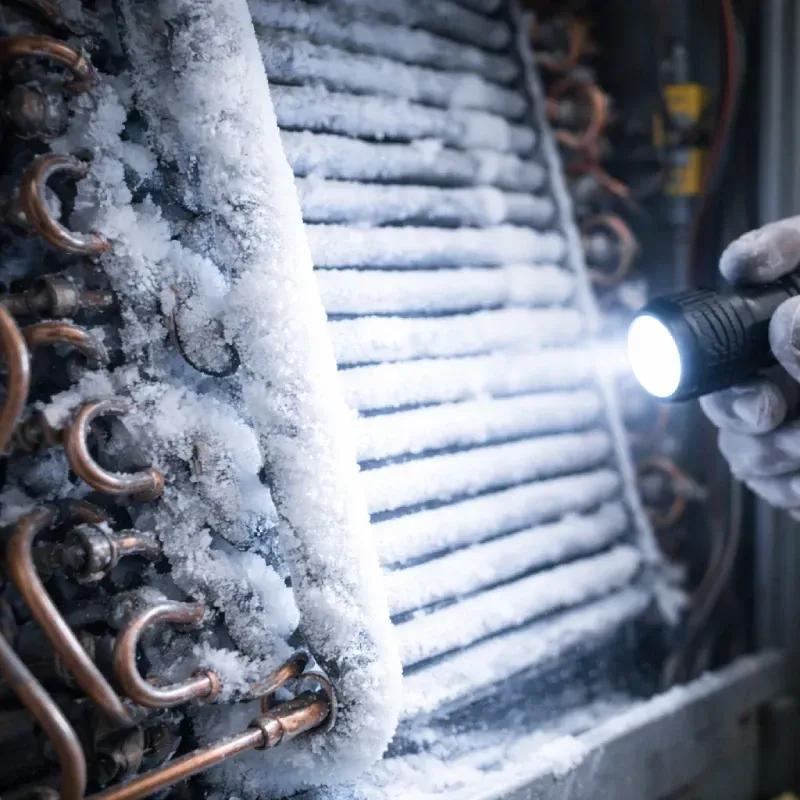
Hearing your system run but feeling no relief is one of the most common emergency AC complaints we receive in St. Cloud. The unit sounds normal, but the air coming from your vents is warm. Several issues can cause this, and knowing which one might fit your situation can help you communicate with the technician before they arrive.
The most common causes include:
- Low refrigerant: Your system runs but can't effectively remove heat from your home. You might notice a hissing or bubbling sound near the indoor unit.
- Frozen evaporator coil: Florida's high humidity often leads to coil freeze-ups. Ice forms on the coil, blocking airflow. You may even see frost on the copper lines near the air handler.
- Dirty condenser coils: The outdoor unit can't release heat properly if its coils are covered in debris. This causes the system to strain and deliver warm air inside.
- Failed compressor: The compressor is the heart of your AC system. If it fails, the system runs but can't circulate refrigerant. You might hear clicking or nothing at all from the outdoor unit.
If your system just shut off and restarted, remember the 3-minute rule. Always wait at least 3 full minutes between power cycles. Restarting too quickly puts immense pressure on the compressor and can lead to permanent damage.
If the air from your vents is warm and you hear your system struggling, turn it off completely and switch to fan-only mode. Running a damaged system longer won't help and often makes the repair more expensive.
How to Tell If Your AC Vents or Filters Are Clogged
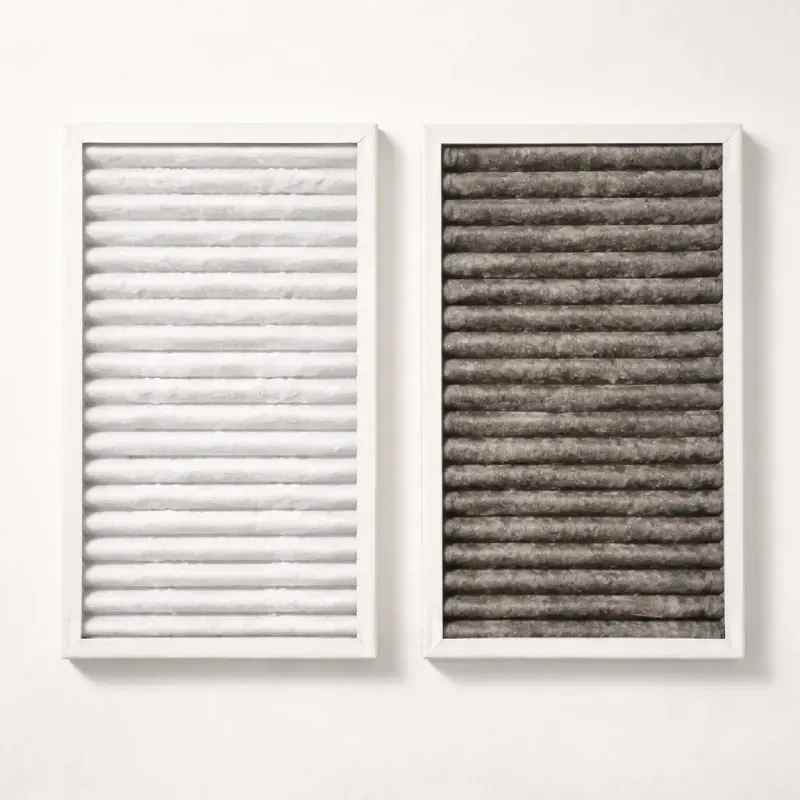
Weak or uneven airflow from room to room doesn't always mean your entire system is broken. A clogged filter or a blocked vent can produce the same symptoms as a failing unit. This quick check takes less than 5 minutes and costs nothing.
First, check your airflow:
- Hold your hand or a tissue in front of each vent throughout your home.
- Strong, steady airflow is normal. Weak or no airflow points to a blockage.
- If one room feels fine but another feels "dead," the problem is likely localized, not system-wide.
Next, check your air filter:
- Locate your return vent, typically a large grille on a wall or ceiling, and remove the filter.
- A clean filter is light-colored, and you should be able to see light through it.
- A clogged filter will be dark gray, feel heavy, and completely block light.
- A clogged filter starves your system of airflow, mimicking the symptoms of a broken unit.
Blocked return vents cause the same issue. Furniture pushed against a return grille, or a closed interior door in a room without its own return, can restrict airflow across the entire system.
St. Cloud's year-round pollen and the active construction dust in newer neighborhoods like Harmony and Canopy can clog filters much faster than you might expect. If your filter looks clean but airflow is still weak at multiple vents, the blockage is likely deeper within the duct system. At that point, a clogged filter isn't the whole answer; it's a sign that a licensed technician needs to inspect further.
What St. Cloud Homeowners Should Do While Waiting for a Repair Tech
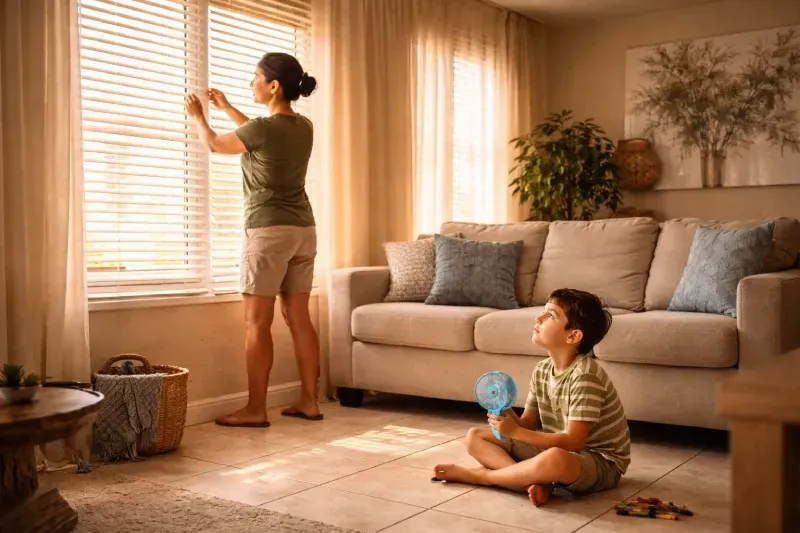
You've made the call, and help is on the way. What you do in the next hour matters for both your family's safety and the condition of your system. St. Cloud's afternoon storms can sometimes slow a technician's travel time, so knowing how to manage the indoor heat properly is crucial.
First, protect your system:
- Turn your thermostat completely off. Do not leave it running in cooling mode if the system is struggling.
- Switch to fan-only mode if your thermostat allows it. This circulates air without straining a potentially damaged compressor.
Keep your home as cool as possible:
- Close blinds and curtains on sun-facing windows. Direct sunlight through glass heats a room very quickly.
- Shut interior doors and gather your family in the fewest, lowest rooms in the house. Heat rises, so lower floors tend to stay cooler longer.
- Avoid using the oven, dryer, or any other appliance that generates heat.
Move vulnerable family members to safety:
- If you have elderly family members, young children, or pets, consider moving them to a cooled vehicle or a neighbor's home while you wait.
- The lowest floor of your home remains your best option if leaving isn't possible.
Be ready when the technician arrives:
- Locate your indoor unit's model number and write it down. It's usually on a label inside the air handler door.
- Have your last service date available if you know it. This information helps the technician diagnose the problem faster.
How Homeowners Insurance Applies to Emergency AC Repairs
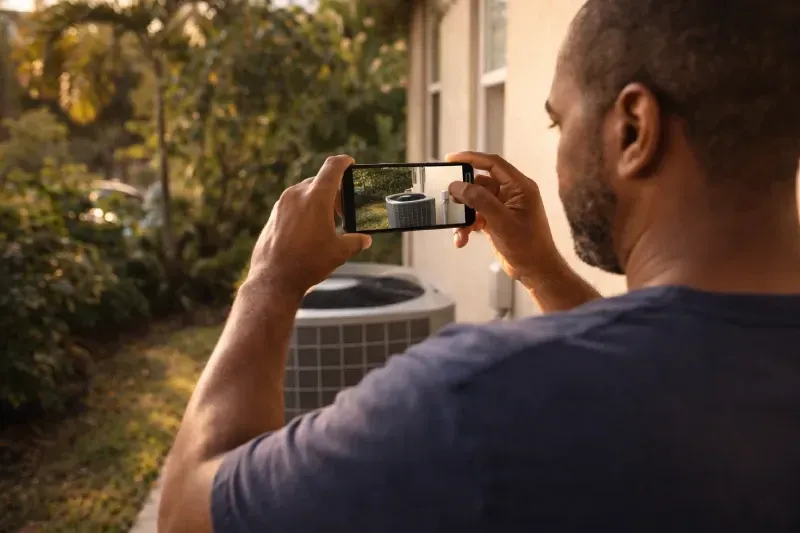
The first question after a breakdown is often about the bill. Florida homeowners' policies vary widely, and St. Cloud residents with older homes near East Lake Toho may face different coverage terms than owners of newer builds. Understanding what your policy typically covers helps you focus on getting the repair done now, instead of waiting days for an answer.
Most standard homeowners' policies cover sudden, accidental damage. They generally do not cover breakdowns due to normal wear and tear. If a power surge during a St. Cloud thunderstorm damaged your system, that might qualify. However, if your 12-year-old compressor finally gave out from age and use, it likely won't be covered.
What affects your claim:
- The cause of failure matters most. Sudden and accidental events are far more likely to qualify than gradual mechanical failure.
- A system replacement carries a higher price tag than a repair. A claim above a certain threshold, often around $5,000 or more, may trigger a closer coverage review by your insurer.
- Good documentation speeds up claims. Take photos of the unit before the technician touches anything. Keep your service records if you have them.
The right order of calls:
- Call your HVAC contractor first. Get the repair diagnosed and documented.
- Call your insurer second, once you have a written assessment from the technician in hand.
Waiting on your insurer before calling a technician delays your repair and puts your household at risk in St. Cloud's summer heat. Get the diagnosis first. For all AC repair needs in St. Cloud, Baez & Son is your trusted air conditioning repair St. Cloud FL provider, day or night.
Steps to Safely Restart Your AC Before the Technician Arrives
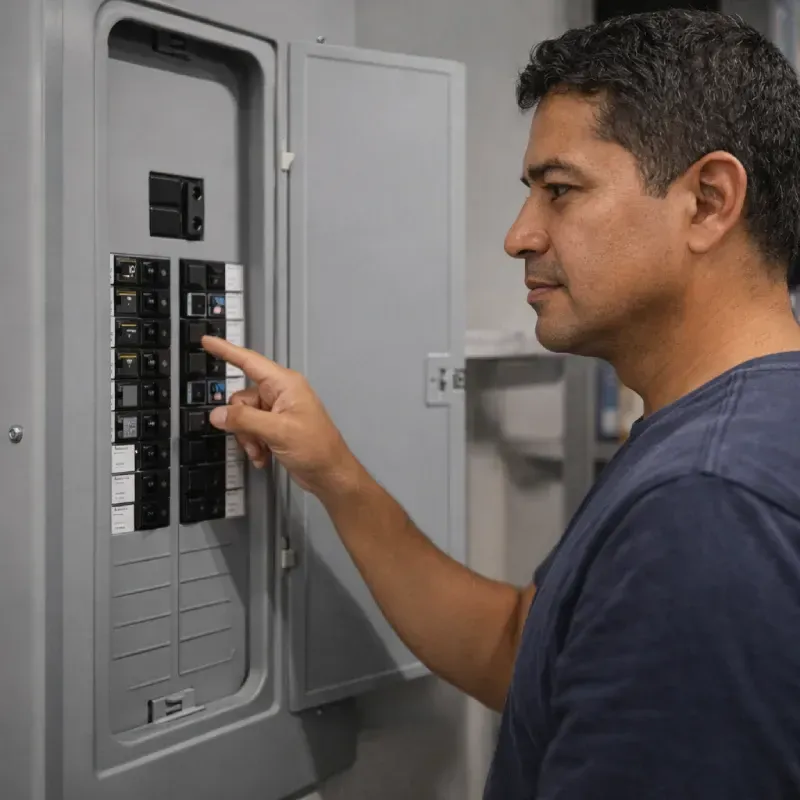
Power surges during St. Cloud's thunderstorm season frequently trip breakers and confuse thermostats. Before assuming the worst, a safe reset takes less than 15 minutes and won't void your service call or cause additional damage if you follow these steps precisely.
Stop immediately if you smell burning or see ice on the unit. Do not attempt a reset under either of these conditions. Call the technician and wait.
If neither applies, follow these steps:
- Step 1: Turn the thermostat completely off. Do not leave it set to cool.
- Step 2: Go to your breaker panel and flip the AC breaker to the off position.
- Step 3: Wait 3 full minutes. Do not skip this crucial step. The system needs time to depressurize safely.
- Step 4: Flip the breaker back on. Then return to the thermostat and set it to cool.
- Step 5: Set your target temperature 5 degrees below the current room temperature. This gives the system a clear signal to run.
- Step 6: Wait 10 minutes and stand near a vent. If cold air is not coming through, shut the system back down and call the technician.
Run this process only once. If it doesn't work on the first attempt, trying it again won't help and may strain a compressor that's already struggling. A licensed technician is the next step, not another reset attempt.
Frequently Asked Questions
Can I call an HVAC contractor for emergency AC repair after midnight?
Many local HVAC contractors in St. Cloud offer 24/7 dispatch, so an after-midnight call is definitely an option. Availability varies by company, so always confirm when you call that a technician can reach you the same night.
Why is my AC blowing air but my house won't cool down?
Low refrigerant, a frozen evaporator coil, or a failing compressor are the most common reasons your system runs but doesn't cool. A licensed technician can diagnose the exact cause on-site and explain what the air conditioning repair involves.
What should I do if my apartment AC stops working?
Notify your landlord or property manager in writing right away, even if you also call or text them. Florida law sets specific response time requirements for rental properties, and written notice protects you if the repair is delayed.
How can I tell if my AC vents are clogged and not just weak?
Check airflow at every vent in your home using your hand or a tissue. If one room has strong airflow and another has none, a blockage or damper issue in that section of ductwork is the likely cause, not a system-wide failure.
Does Florida homeowners insurance cover a broken AC unit?
Coverage depends on the cause of the failure, not just the cost of the repair. Sudden, accidental damage may qualify under a standard policy, but routine wear-and-tear breakdowns typically do not.
How do I know if my AC is broken or just needs a reset in St. Cloud's heat?
Try the safe breaker reset once, following the steps outlined above. If no cold air comes through within 10 minutes of the reset, the problem is mechanical and requires a licensed technician to diagnose and fix.
AC Down Right Now? We're Already on the Way.
24/7 emergency AC repair across St. Cloud and Central Florida. Call (407) 460-8406. Average 45-minute response.
Who We Are

Baez & Son Air Condition & Heating is a veteran-owned HVAC company serving St. Cloud, FL and the surrounding area. Honest work, dependable service, and a name they stand behind on every job.
Licensed, bonded, and insured
CAC#1823925 | CMC#1251747
Veteran-Owned & Operated
Bilingual English / Español
Contact Us
Hours of Operation
Open 24/7
Emergency service available
Follow Us


Copyright 2026. Baez & Son Air Condition & Heating. All Rights Reserved.
