
What Strange Noises From Your AC Mean | St. Cloud, FL
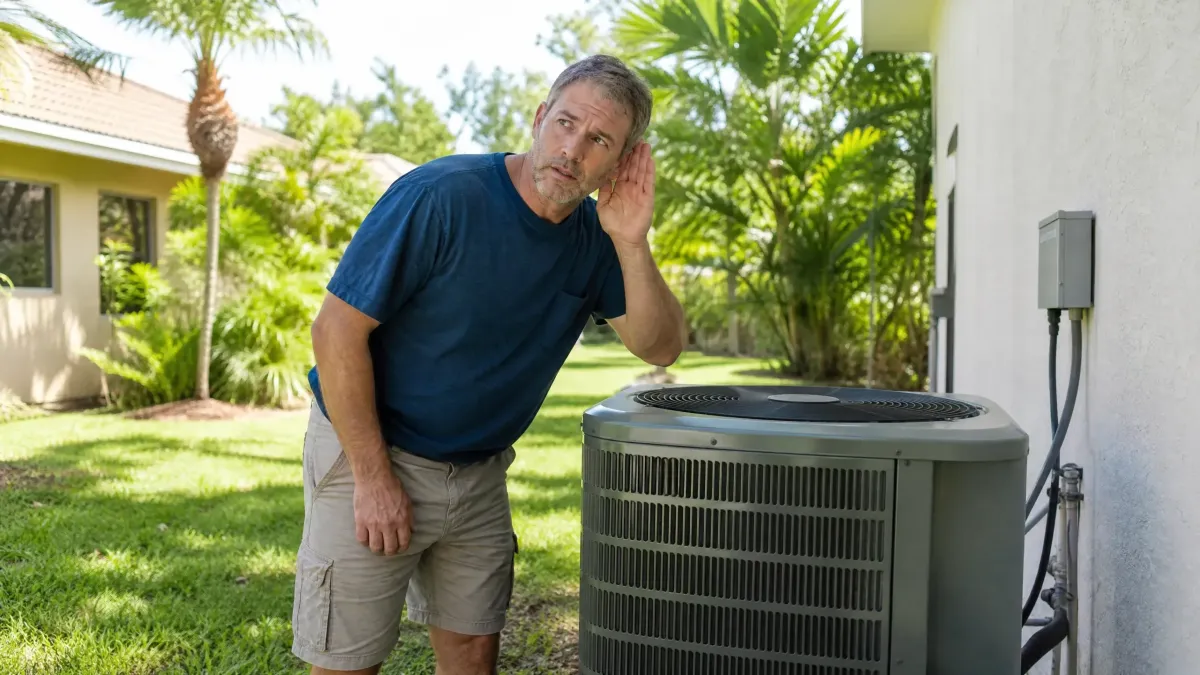
A healthy AC runs with a low, steady hum. So when you hear something new, your system is trying to tell you something. Strange noises from your AC often warn you before a part fails for good. In a St. Cloud summer, catching that early keeps a small fix from becoming a big one. Here is what each sound means and what to do.
Grinding
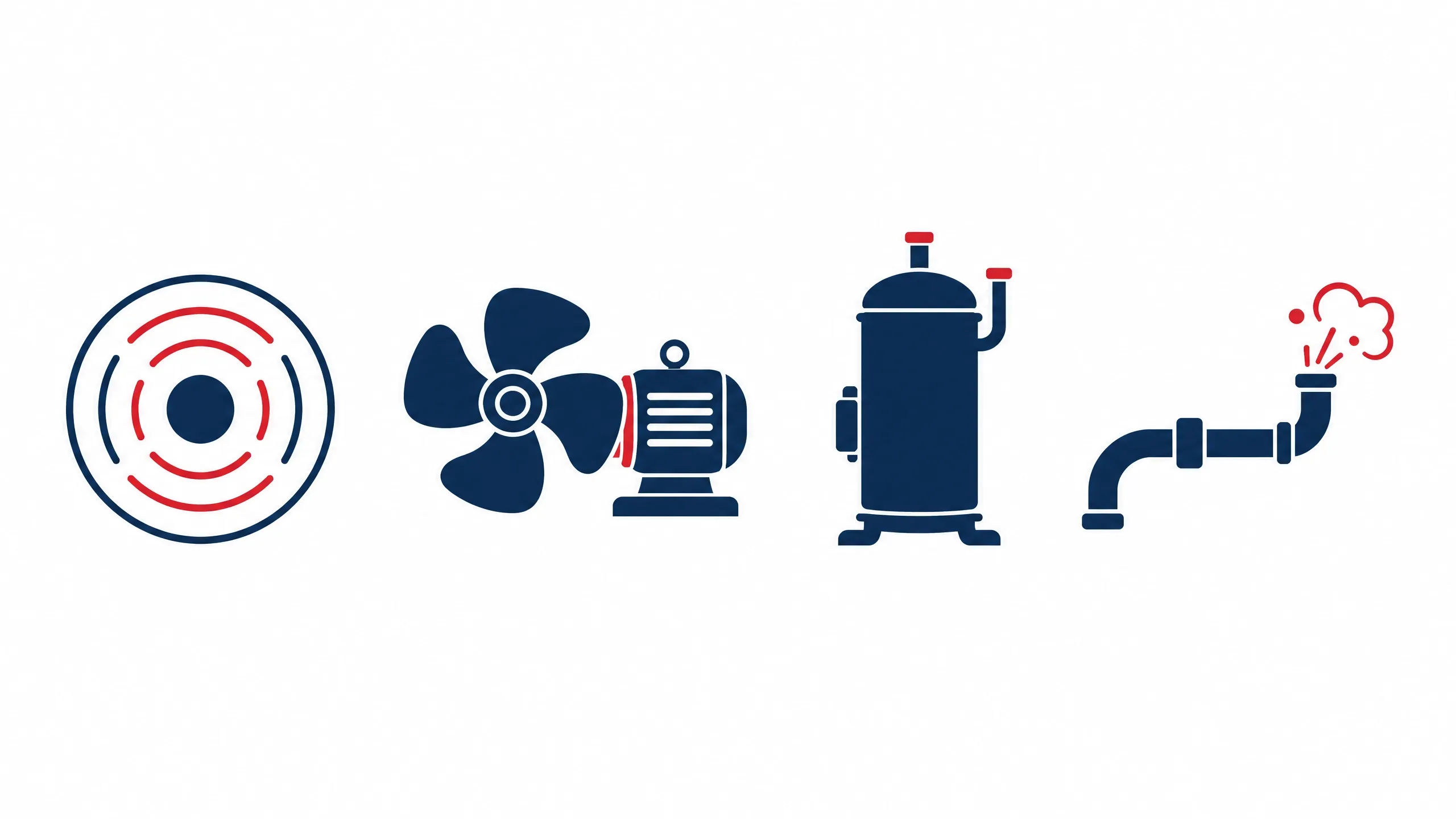
A grinding sound usually means worn fan or motor bearings. Metal is rubbing on metal inside the unit. Turn the system off when you hear it. Caught early, a technician can often just replace the bearings. Wait too long and you may need a full blower motor repair.
Squealing
A loud squeal or screech points to the moving parts. It can be a worn belt or failing fan motor bearings. On some units, a high squeal can mean dangerous pressure in the compressor. Do not ignore it. Regular service keeps these parts oiled and quiet (energy.gov).
Banging or Clanking
Banging usually means a loose or broken part inside the compressor or fan. A loose bolt or a failing connecting rod can rattle hard against the housing. This is not a wait-and-see noise. Shut the system down and call us before the part damages more of the unit.
Hissing or Bubbling
A hiss or bubble often means a refrigerant leak. Refrigerant is under pressure, so it hisses as it escapes. Low refrigerant hurts cooling and can freeze your coil. By law, only a certified technician can handle refrigerant (epa.gov). Call for refrigerant leak repair so the leak is found and sealed, not just topped off.
Buzzing
A buzz usually points to an electrical problem. It can be a loose wire, a failing capacitor, or a struggling motor. If you also smell burning or see sparks, this is urgent. Turn the unit off at the breaker and call for emergency AC repair right away.
Clicking
A click or two at startup and shutoff is normal. Constant clicking is not. It often means a relay or thermostat problem talking to the system. If the clicking will not stop, or the unit will not start, it needs a look.
Rattling
A light rattle can be simple. Twigs, leaves, or a loose panel screw can cause it. You can safely clear debris and tighten an outside panel with the power off. If the rattle comes from deep inside the unit, stop and call a pro. That points to a loose internal part.
Where the Sound Comes From Matters
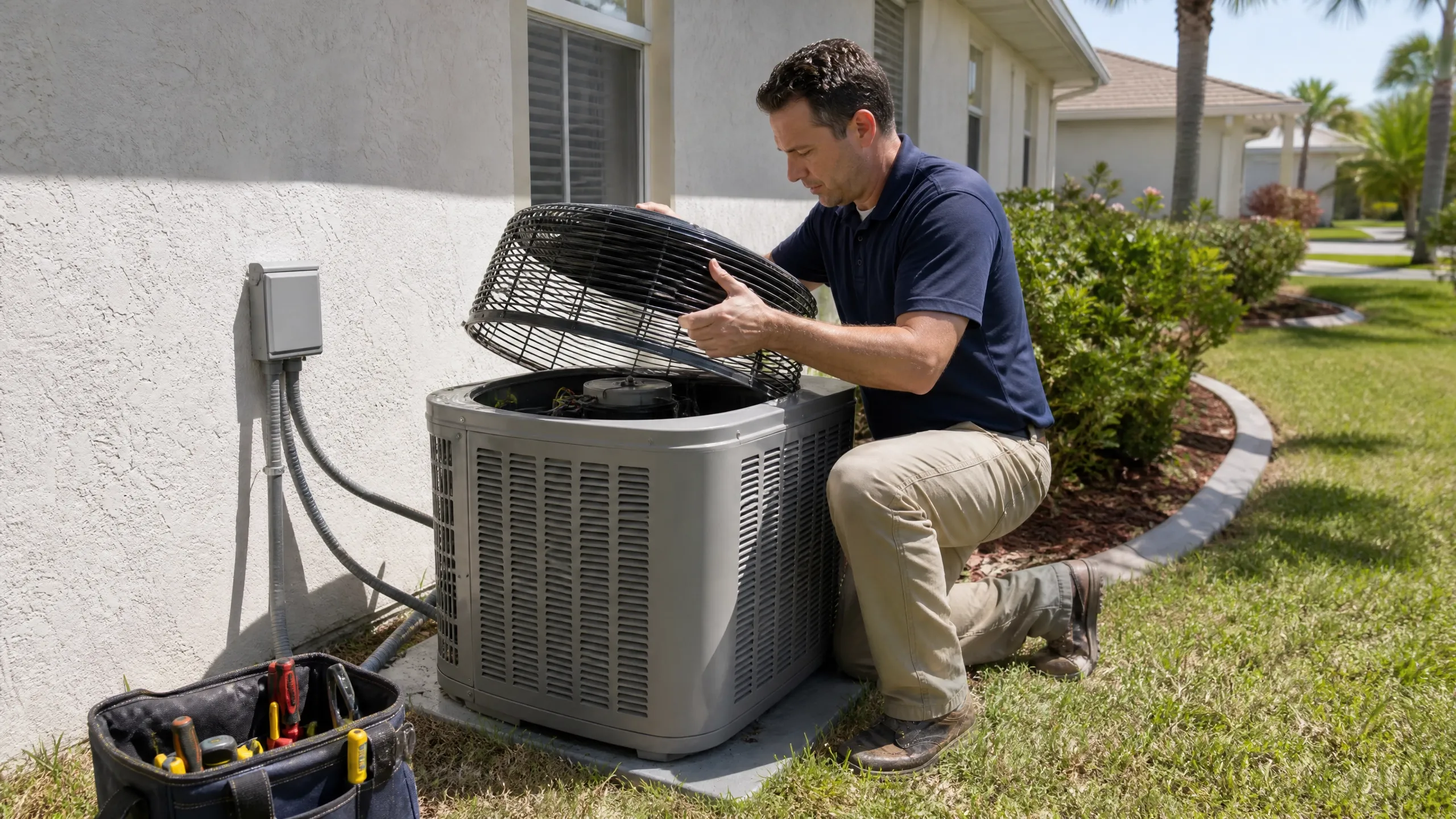
It helps to notice where the noise starts. Your system has two main parts. The indoor air handler moves air through your home. The outdoor condenser pulls heat outside. A rattle or grind from indoors often points to the blower motor or a loose panel. A bang or hiss from outdoors usually points to the compressor or refrigerant lines.
You do not need to name the part. Just tell us which unit is loud and what the sound is like. That helps our technician arrive ready with the right tools. It also speeds up the visit, so you are cool again sooner.
Which Noises Mean Turn It Off Now
Some sounds mean you should not keep running the system. Grinding, banging, and loud buzzing all fall here. A burning smell with any noise is an emergency. Running the unit through these sounds can wreck the compressor, the most expensive part to replace. When in doubt, shut it off and call. Our air conditioning repair team is here 24 hours a day.
Why St. Cloud Systems Get Noisy
Our AC units run most of the year. Long run times and heavy humidity wear down bearings, belts, and electrical parts faster here. Dust and yard debris around the outdoor unit add to it. Steady maintenance catches loose and worn parts before they get loud. That is the cheapest way to keep your system quiet and cool.
Frequently Asked Questions
Is it safe to run my AC if it is making noise?
It depends on the sound. A soft rattle from a loose panel is minor. Grinding, banging, buzzing, or hissing are not. Turn the system off for those and call a technician before more parts fail.
Why is my AC making a loud noise when it turns on?
A single click or short hum at startup is normal. A loud bang, buzz, or squeal is not. It often points to the compressor, a capacitor, or a motor. Have it checked before you keep using the system.
What does a hissing sound from my AC mean?
Hissing usually means refrigerant is leaking under pressure. Low refrigerant weakens cooling and can freeze the coil. A certified technician needs to find the leak and seal it, then recharge the system.
Why is my AC buzzing?
Buzzing usually signals an electrical issue, like a loose wire or a failing capacitor. If you smell burning or see sparks, shut the unit off at the breaker and call for emergency service right away.
Can I fix a rattling AC myself?
Sometimes. With the power off, you can clear debris and tighten a loose outside panel. If the rattle comes from inside the unit, stop there. A loose internal part needs a technician.
Hear Something Strange? Call Baez & Son
Do not let a new noise turn into a big repair. Call Baez & Son at (407) 460-8406 and we will find out what your AC is trying to tell you. You can also request service online for a free, no-obligation quote. We are veteran-owned, bilingual, and here 24/7.